
OutdoorClass: Hunting Courses
Outdoor ClassTravel & Local
4.639.00 Reviews
- Version
- 10.200.1
- Installs
- 10.00K
- Age Rating
- Teen
Screenshots
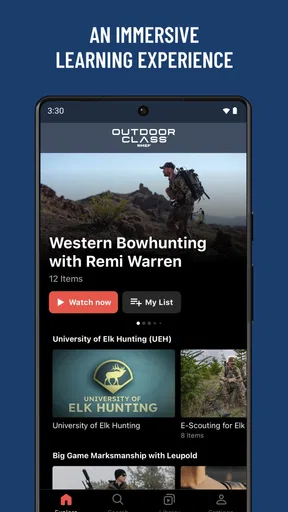
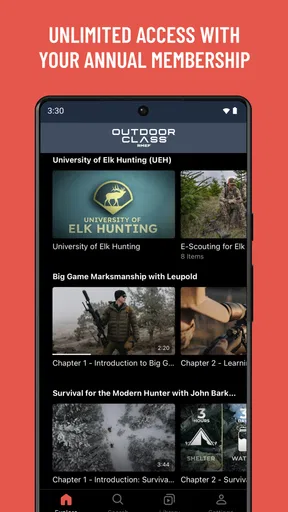
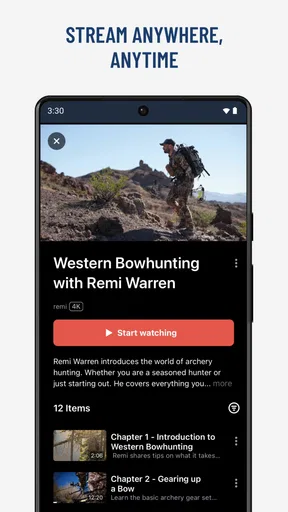

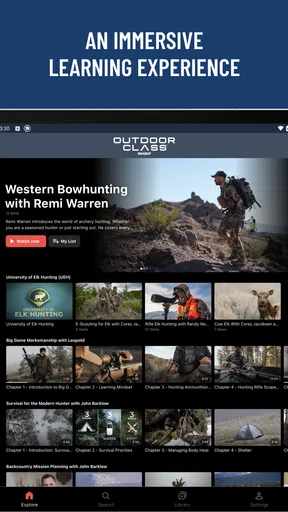
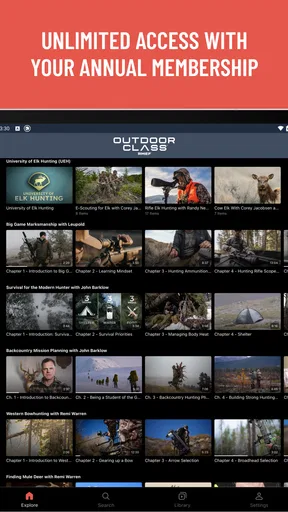
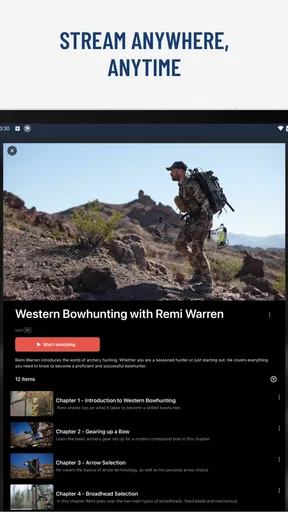
Our Review of OutdoorClass: Hunting Courses
 Analysis by Appyee
I approached OutdoorClass: Hunting Courses as a learning app rather than a simple collection of outdoor videos. That distinction matters. Its purpose is to help people build hunting, cooking, and calling knowledge through lessons from experienced specialists, so the value depends less on quick entertainment and more on whether you are willing to learn in stages and practice away from the screen.
In my experience, the app makes the most sense for someone who wants structured guidance before heading outdoors, or for an existing hunter who wants to improve one specific skill without sorting through a huge pile of unrelated clips. It is available free in the Travel & Local category, although some individual items are listed at $69.99, so I would examine what is accessible before treating it as a completely free learning library.
What using OutdoorClass feels like in practice
The developer, Outdoor Class, has positioned this as a focused education tool rather than a general travel companion. The store summary points toward hunting, cooking, and calling, and that combination gives the app a broader purpose than a narrow field guide. I can imagine using one lesson to prepare for a trip, another to improve food preparation at home, and a calling lesson when I want to understand technique instead of merely copying a sound.
The strongest part of that approach is the chance to learn with a clear intention. Instead of opening a social video platform and hoping the recommendation system finds something useful, I would start with a question: what am I trying to do better? That question helps keep the experience practical. It also exposes one of the app’s limits: anyone looking for instant answers, live local conditions, or a replacement for hands-on instruction may find the format too narrow.
The audience response is encouraging. The app holds a 4.6 average from around 105 ratings, with roughly 39 written reviews, and it has passed 10K+ installs. Those figures suggest that the people who find it useful tend to respond positively, but they do not mean every learner will have the same experience. A specialist course can be valuable to one person and overly advanced, too slow, or simply irrelevant to another.
Where people are most likely to get stuck
The first friction point is expectation. “Free” describes the app’s price, but the presence of in-app items priced at $69.99 means I would not assume that every course or lesson is included without checking its access status. This is not necessarily a problem; specialized instruction can require paid material. Still, it changes how I would recommend starting. Browse first, identify the exact skill you want, and only then decide whether a paid item fits your needs.
A second sticking point is choosing a useful learning path. Hunting knowledge is not one single subject. A beginner may need basic context and vocabulary, while an experienced person may only want to refine calling or improve field cooking. If you open lessons without a goal, the app can feel like a shelf of courses rather than a personal plan. I get better results by defining one outcome for the next session, such as understanding a calling method well enough to recognize its purpose or learning a preparation approach I can repeat safely at home.
There is also a gap between watching and doing. An instructional lesson can explain an idea clearly, but watching it once does not create reliable field skill. I would keep a small notebook beside the phone and write down three things: the main principle, the mistake the instructor warns against, and the situation where the technique applies. That turns passive viewing into a reference I can revisit before practice.
People who expect a map, trip planner, hunting license guide, or real-time outdoor alert system may also be disappointed. This is a course-oriented app. It can support preparation, but it should not be treated as the only source for local regulations, current conditions, navigation, or safety decisions. Those responsibilities belong to official local resources and sound judgment in the field.
Setup checks that prevent avoidable frustration
Before judging the lessons, I would make a few simple checks. The app’s minimum operating requirement is Android 8.0, so an older device may be the first reason installation or normal use becomes difficult. On a compatible phone, I would also make sure the operating system is reasonably current, free enough storage is available, and the device has a stable connection when first opening course material.
I would sign in and browse calmly before beginning a serious study session. The useful question is not only “Can I open the app?” but “Can I reach the lesson I intended to use?” If a course appears unavailable, I would first check whether it belongs to a paid item rather than repeatedly reinstalling the application. That distinction saves time and avoids mistaking access rules for a technical failure.
For outdoor use, I would prepare before leaving home. A phone can become inconvenient when the signal is weak, the screen is difficult to see, or the battery is being reserved for navigation and emergencies. I would review the relevant material indoors, make notes, and treat the app as a preparation aid rather than assuming it will be comfortable to operate in the middle of a demanding activity.
Audio deserves special attention for calling lessons. I would test the volume and use headphones in a quiet place if the lesson depends on hearing subtle differences. At the same time, I would avoid practicing calls around wildlife or other people without considering the surroundings. The app can explain a technique, but the environment determines whether practicing it is appropriate.
Cooking lessons need a different kind of preparation. I would pause often, write down the sequence, and check that I have the necessary ingredients and equipment before starting. This is a better workflow than trying to hold every instruction in memory while handling food. It also makes it easier to notice where a method depends on personal preference or available tools rather than assuming every step will translate perfectly to my kitchen.
How I recover when a lesson or session goes wrong
When a lesson does not open or behaves unexpectedly, I would start with the least disruptive steps: close and reopen the app, check the connection, and confirm that the phone still has available storage. If the problem appears only with one course or item, I would avoid assuming the entire app is broken. The issue may be tied to that particular access path, while other material remains usable.
If progress is interrupted, I would return to the last point I can clearly remember instead of rushing through everything again. Keeping written notes is especially useful here. A short record of the lesson topic and the last completed idea gives me a reliable restart point, even if I need to reopen the material later.
I would also separate playback problems from learning problems. If the sound is unclear, I would test the phone’s volume and headphones. If the picture is difficult to follow, I would move to a brighter, steadier viewing setup. If the lesson itself feels confusing, I would replay the specific section and compare it with my notes. Reinstalling an app cannot solve a concept that needs slower study.
For paid material, I would verify the item and the account used for access before attempting a purchase again. Repeating a transaction because a screen took too long to respond can create unnecessary confusion. A careful pause, followed by checking what the app currently shows, is the safer recovery habit.
One practical technique I found valuable is to divide a long learning goal into short field-ready cards. After watching a lesson, I would write a heading, the key sequence, one caution, and one question to investigate through official local guidance or supervised practice. This prevents the phone from becoming the only place where the knowledge exists and makes review possible when connectivity is poor.
When the app is not the cause
Outdoor learning often involves conditions the app cannot control. A weak connection may come from the location, not the lesson. A phone may overheat in direct sun, lose battery quickly in cold weather, or become hard to operate with gloves. None of those situations tells me whether the educational content is good. They simply show why I would prepare indoors and avoid depending on a device for essential field decisions.
The same applies to local hunting rules. A course can teach general technique, but regulations vary by place and can change. I would confirm seasons, licenses, permitted equipment, land access, and species-specific requirements through the relevant official authority. The app is useful for building understanding; it is not a substitute for checking the rules that apply to my exact location.
Safety is another area where responsibility remains with the user. Lessons about hunting or calling should be approached with respect for surroundings, other people, animals, and equipment. I would never use an instructional explanation as permission to take a risk, enter unfamiliar land, or ignore established safety practices. If I were new to hunting, I would pair the app with supervised, lawful instruction rather than treating a screen-based course as complete field training.
There is also a personal learning-style issue. Some people absorb information best by watching an expert demonstrate it, while others need a live coach who can correct posture, timing, or decision-making immediately. OutdoorClass is more appealing to the first group. If I needed direct feedback, local mentorship or an in-person class would probably be a better primary option, with this app serving as preparation or review.
How it compares with usual alternatives
The most obvious alternative is free video searching. That option offers enormous variety and can be useful for discovering different opinions, but it also makes quality control and organization the user’s responsibility. OutdoorClass is more attractive when I want a focused learning environment and less random browsing. The trade-off is that a paid course item can cost more than watching scattered free clips, even if the structured approach saves time.
Printed books and field guides remain better for quick, quiet reference. They do not depend on battery life or a connection, and I can mark pages easily. They are less helpful when I need to see a movement, hear a call, or follow a demonstrated cooking process. I see the app and a good field guide as complementary rather than competing tools.
In-person instruction has the advantage of immediate correction and local context. A teacher can notice a mistake that a video cannot, while a course app is easier to revisit on my own schedule. For someone building confidence, I would use OutdoorClass to prepare questions and learn terminology before attending a local class or going out with an experienced mentor.
General travel apps are better for routes, places, maps, and trip logistics. OutdoorClass belongs earlier in the process: it helps me prepare skills and knowledge. That narrower purpose is a strength if I want hunting education, but it means I would need other tools for planning the journey itself.
Who should use it, and who should skip it
I would recommend it to beginners who enjoy guided learning, experienced hunters who want to revisit a particular skill, and home cooks interested in outdoor preparation methods. It can also suit someone who prefers learning privately before asking questions in a group. The free entry point makes browsing less intimidating, while the Teen content rating signals that the subject matter is not aimed at very young children.
I would be more cautious recommending it to someone who wants only free content, immediate local answers, or a fully interactive coach. The $69.99 price attached to individual in-app items is significant enough that I would not purchase impulsively. I would also skip it as a primary resource if my main need were navigation, regulations, weather, trip booking, or emergency information.
The app was released on Jun 6, 2022, and its current version is 10.200.1. Those details are useful when checking compatibility or discussing a problem with support, but they do not tell me how well a particular lesson matches my needs. My decision would still come down to course relevance, teaching style, and whether I am prepared to practice beyond the screen.
My practical verdict after using it
OutdoorClass: Hunting Courses is most valuable when I treat it as a preparation system, not a magic shortcut. I would choose one skill, review the relevant material in a stable setting, take notes, confirm local rules separately, and then practice responsibly. That workflow gives the app a clear role and prevents common frustrations from being blamed on the wrong thing.
I like the focused subject matter and the possibility of learning hunting, calling, and cooking in one place. I also appreciate that the app can fit around my schedule better than a fixed class. The main caution is access: the app itself is free, but some items carry a substantial individual price, so browsing and comparing the available material should come before spending.
My final recommendation is therefore conditional but positive. If you want organized outdoor instruction and are comfortable turning lessons into real practice, it is worth exploring. If you need local legal guidance, live feedback, navigation, or a completely free reference, use a different tool alongside it. For the right learner, the best result comes from combining this app’s demonstrations with official information, a field guide, and sensible hands-on supervision.
Verdict
Strengths of OutdoorClass: Hunting Courses
- Practical hunting lessons are easy to follow on a mobile device.
- Course content covers skills for beginners and experienced hunters.
- Video-based instruction makes techniques clearer than text alone.
- Lessons can be reviewed whenever your schedule allows.
- Useful reference material helps reinforce knowledge in the field.
Limitations of OutdoorClass: Hunting Courses
- Some courses or features may require a paid subscription.
- Content may focus mainly on hunting practices relevant to the US.
- A stable internet connection may be needed for streaming lessons.
- The app may not replace hands-on training with an experienced mentor.
- Course quality and depth can vary between instructors or topics.
Similar Picks in This Category
View All
Google Maps
Google LLC3.4

Google Maps Go
Google LLC4.1

Booking.com: Hotels & Travel
Booking.com Hotels & Vacation Rentals4.8

Google Earth
Google LLC3.8

Skyscanner Flights Hotels Cars
Skyscanner Ltd4.8

trivago: Compare hotel prices
trivago N.V.4.4
Frequently Asked Questions
What is OutdoorClass: Hunting Courses?
OutdoorClass: Hunting Courses is an educational app designed for people who want to improve their hunting knowledge and outdoor skills. It offers video-based lessons covering subjects such as hunting techniques, wildlife behavior, equipment, safety, conservation, and field preparation. The content is presented by experienced hunters and outdoor professionals, making it useful for beginners as well as more experienced users seeking structured instruction.
What topics and hunting skills are covered in the app?
The app covers a broad selection of hunting-related topics, including scouting, tracking, shot placement, firearm and archery fundamentals, field dressing, hunting strategies, gear selection, and outdoor survival. Depending on the available course, users may also find lessons focused on specific game animals, habitats, seasons, and regional considerations. The exact content can vary, so users should review the course catalog before subscribing.
Is OutdoorClass suitable for beginners?
Yes, OutdoorClass can be useful for beginners because many lessons explain fundamental concepts in a clear, step-by-step format. New hunters can learn about preparation, safety, equipment, ethical decision-making, and basic field practices before going outdoors. However, the app should be treated as a learning supplement rather than a replacement for supervised practice, local instruction, or official hunter-education requirements where those are required by law.
Does the app work offline, and can I watch courses without an internet connection?
OutdoorClass may allow users to save selected lessons for offline viewing, which is particularly helpful when traveling to areas with weak or unavailable mobile coverage. Offline availability can depend on the subscription plan, device, app version, and the individual course. It is best to download lessons while connected to Wi-Fi and confirm that they remain accessible before leaving for a hunting trip.
Is OutdoorClass: Hunting Courses free to download?
The app may be free to download, but access to its complete course library generally depends on a paid membership or subscription. Some content may be available for preview, while premium lessons and full courses can require payment. Before confirming a subscription, users should check the current price, billing period, trial conditions, renewal policy, and cancellation instructions listed in the Google Play Store or Apple App Store.
